An Inside Look at Joan Creus: A Basketball Legend’s Journey
When you think of basketball greatness, it’s easy to rattle off names of championship winners. But true greatness? It’s found in those who continue to evolve and compete year after year, regardless of titles. Enter Joan ‘Chichi’ Creus, a living testament to that ethos. Born in Ripollet, Barcelona, on November 24, 1956, Creus had a dazzling 24-year career in Spanish basketball’s elite, showcasing that passion and hard work can defy the limits of age.
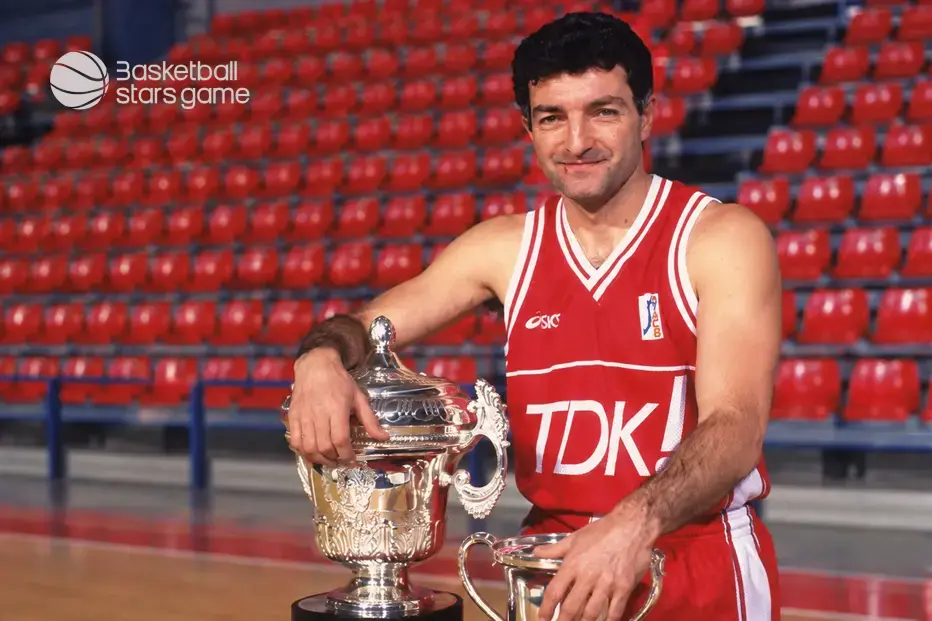
Standing at just 5’9”, Creus didn’t have the typical physique of a standout player. Yet, he solidified his legacy as one of the best point guards in ACB history, amassing a record 20,216 minutes played. Through his professional journey, he left an indelible mark at clubs like Granollers and TDK Manresa and became a household name, famously guiding TDK to win the Copa del Rey in 1996 and Liga in 1998, where he nabbed MVP honors in both tournaments.
After hanging up his sneakers, Creus remained closely tied to the basketball world, finding success in various roles. Recently, we had a nearly four-hour conversation where Creus shared insights and anecdotes from his storied career—enough material to fill a book!
Staying Active After Retirement
So what does a basketball icon do after retirement? “I’ve always loved sports in general,” Creus said. “These days, I try to spend my free time watching and practicing sports. I just got home from watching Roland Garros! I also enjoy walking several kilometers each day and riding my bike, although I’ve been a bit off it lately because I’ve picked up pádel. Doing it all keeps me fit!”
Is Basketball Still Your Jam?
But has the game lost its charm? “Honestly, yes, I’ve saturated a bit. I still watch, but not as passionately as before. I select my games now. If I’m out with friends and miss a game, I’m okay with that. I follow Euroleague games more closely during the week, as weekends fill up with other activities. I’m following, but from a bit of a distance.”
The Past and Present: Life in Barcelona
These days, Creus calls Barcelona home, but he still keeps a residence in L’Ametlla del Vallès, where he used to live. “I travel back on weekends to my old haunts and enjoy the best of both worlds, being between the city and my roots.”
What If Basketball Wasn’t in the Cards?
If basketball didn’t pave his way, what sport would have filled that competitive drive? “I would’ve loved to play soccer! I actually think I was better at it as a kid. During recess, I spent so many hours playing—it came easier to me compared to basketball, especially since I was smaller. But basketball became more accessible because of my background—my dad was a player and was directly involved in basketball clubs.”
Early Days: The Path to Professional Basketball
Creus’s beginnings were humble, emerging from a small school in Ripollet where basketball thrived. According to him, “My school was always among the best in Catalonia, competing on national stages. I wasn’t the best player back then; others shined brighter. However, by 14 or 15, I began to take significant steps forward in my game.”
The Family Influence
Of course, Creus credits his dad for planting the seeds of his basketball passion. “My father was a notable player, even earning caps for the Catalan selection. He played for first-division teams and was an inspiration as both a player and a coach. His influence and family connections in the sport were fundamental to my choice of basketball.”
A Life In Basketball Like No Other
“It was inevitable; my brother also played professionally for TDK Manresa for nine years. We both reached the highest levels of the game. Then there’s my sister, who enjoyed basketball on a more casual level,” he notes, adding pride in his family’s athletic contributions.
“Having two kids myself, one, Joan Jr. even played in ACB for Manresa. There’s basketball in our blood!”
Sizing Up the Challenges
Did Creus’s height impact his early career? “Definitely, there were challenges. But it was less about my height and more about where I was playing. Growing up in Ripollet, a small town close to Barcelona with a rich basketball culture but not a major club, accessibility was a barrier. It wasn’t until I was 15 or 16 that I really started to stand out. We even competed against heavyweights like Barça and Joventut, and I relished those clashes. Playing at that level was exhilarating, and it paved the way for my senior team debut in the second-highest division when I was just 16!”
A Stepping Stone to the Top
After impressing at Ripollet, Creus joined the first division’s Hospitalet from 1975 to 1977. “I was young, just 18, and it felt like stepping into another world. I took it slowly, improving step by step. I remember a seasoned pro, Udaeta, telling me, ‘Just focus on getting better every day.’ That mentorship helped a lot.”
From Hospitalet to Granollers
When Granollers came calling, Creus’s move would define a significant part of his career. “They paid 500,000 pesetas to take me from Hospitalet because commuting was draining. I spent at least an hour and a half stuck in traffic daily! Playing practically at my doorstep in Granollers was a no-brainer for me. My second season was stellar, and I earned my place quickly.”
Memorable Moments and Upsets
In his time at Granollers, defeating the mighty Real Madrid stands out. “On December 22, 1979, we triumphed over them after they had an invincible streak. To cap it off, the national lottery was drawn that morning, and we won the match later that day, causing quite the buzz in Granollers!”
A Dream Move to FC Barcelona
After his success in Granollers, Creus took a major step by joining FC Barcelona in 1980. “Those two seasons were magical—winning both the Copa del Rey and the league. The second year presented challenges; while I played well, I wasn’t the starter. I craved more playing time, which led me back to Granollers.”
Reflections on Career Decisions
Creus reflects on pivotal moments, noting, “Sometimes I do wonder about decisions. I had great offers, including one from Pamesa Valencia which I ultimately turned down. It’s a strange pull; deciding to prioritize joy in the game over a shot at titles or higher financial gains was my path.”
Staying True to Values
When it comes to his philosophy in basketball, Creus prioritizes happiness and personal fulfillment. “People often chase titles, but for some of us in teams that aren’t title contenders, other milestones matter just as much.”
The Influence of Coaches
Reflecting on influences, Creus emphasizes the importance of mentorship he received. “My early coaches saw potential in me and helped ignite my passion for the game—something that sticks with me to this day. They showed me how to live and breathe basketball!”
Legacy: Beyond the Court
Even post-retirement, Creus’s legacy extends to his contributions behind the scenes. As an assistant coach, directing at schools, or fostering future talent, his love for the game lives on. As a player, Creus taught by example: commitment, continuous improvement, and sheer joy in competition. The lesson for aspiring players? Enjoyment and passion for the game are what matter most. In the end, that’s what defines true greatness in sports. “Wherever I’ve played or contributed, it was the love of basketball that kept the flame alive. It doesn’t matter if it’s in a Goliath team or one of the smaller sides; if you’re happy participating, that’s what counts. I’ve cherished every moment of this journey. Joan Creus: a basketball icon and revered in every aspect of the game. His career remains a blueprint for aspiring athletes to find pride in their own journey. The idea isn’t just to chase glory but to enjoy the sport you love—because that’s what builds legends!”